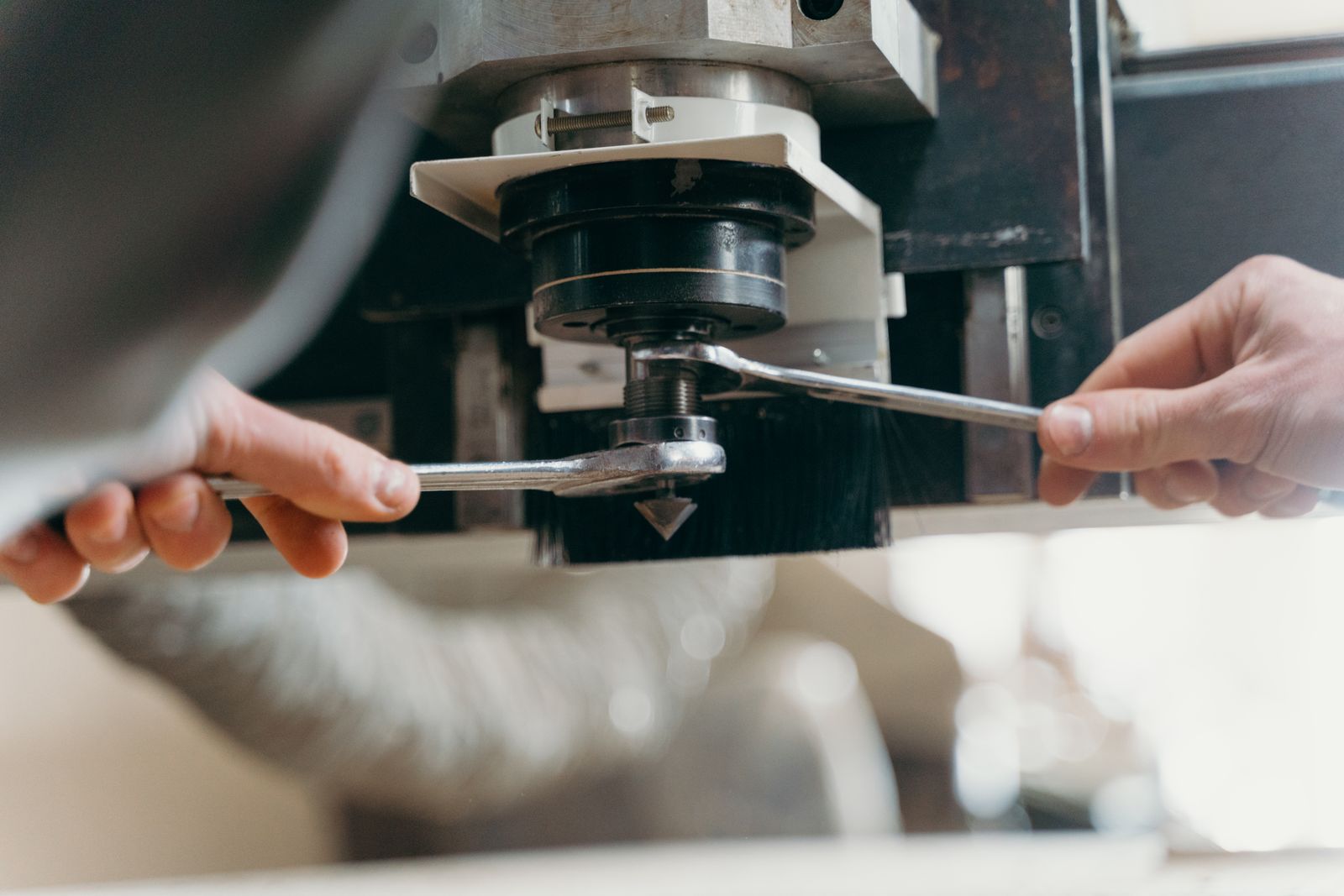
A plant manager asks for capital to add a new line. The business case is throughput: we're running flat out, we need more capacity. It's a reasonable request. It's also, very often, the most expensive way to solve the problem — because a large share of the capacity they're missing is already on the floor, sitting inside every changeover.
A changeover is the interval between the last good part of one run and the first good part of the next. During it, the line is staffed, energised, and producing nothing. Most plants treat that as a fixed cost of doing business. It is not fixed. It is one of the most improvable — and most ignored — assets in the building.
What a changeover actually costs
The numbers on structured changeover reduction have been stable for decades, because the method — SMED, Single-Minute Exchange of Die, developed by Shigeo Shingo — is well understood and repeatedly proven.
Shingo's real insight — it isn't about turning wrenches faster
Everyone remembers the headline: "single-minute" changeovers. The genuinely useful insight is quieter. Most changeover time is not mechanical work at all — it is preparation. Hunting for tools. Waiting for the next die to arrive from storage. Finding the setup sheet. Making adjustments by trial and error until the first part passes.
Shingo's move was to split every changeover step into two kinds:
Internal setup — work that can only happen with the machine stopped.
External setup — work that can happen while the machine is still running the previous job.
Then: relentlessly convert internal into external, and streamline what's left. The wrench turns were never the bottleneck. The organisation around the wrench turns was.
See it happen
Here is a 70-minute changeover where every step is done with the line stopped. Press the button and watch what happens when the external steps move off-line — and the internal ones get streamlined.
The SMED sequence
| 1. Observe & separate | Film one real changeover. Sort every step into internal (stopped) or external (running). This alone usually reveals that a third or more of the "changeover" never needed the machine stopped. |
| 2. Convert | Move internal work to external: pre-stage tooling and the next die at the machine, pre-heat, kit and stage all parts and paperwork before the line stops. |
| 3. Streamline | Attack what genuinely must be internal: quick-release fasteners instead of bolts, standardised settings instead of trial-and-error adjustment, shadow boards so nothing is hunted for. |
| 4. Standardise & sustain | Make the faster changeover the documented standard — not a one-off hero effort. The gain only compounds if every future changeover inherits it. |
What it's worth on your floor
Changeover time recovered is production time gained — on equipment you already own, with no capital and no commissioning. Enter your own numbers.
A SMED event costs a few days of a team's time. A new line costs seven figures and a year. For a high-mix plant, changeover is almost always the cheapest capacity you can buy.
Is your changeover a SMED candidate?
A quick read. Nothing tracked, nothing saved.
What to watch next
Before you write the capital request, film a changeover. There is a real chance the capacity you are about to spend a million dollars on is already sitting on your floor — in the gap between the last good part and the next one, waiting for someone to treat it as the asset it is.
Chasing capacity you might already own? Happy to compare notes.
Get in touch →Where these numbers come from
- Shigeo Shingo, A Revolution in Manufacturing: The SMED System — the internal/external principle and the 1,000-ton press case
- Lean Production, SMED (Single-Minute Exchange of Die) — method and the six-step approach
- Kaizen Institute, SMED: reduce changeover, boost efficiency — typical 50–80% reduction ranges
- Hero image: site asset (wid-plant.jpg)